Artificial Turf Drainage Solutions in Allen, TX
Drainage Done Right from the Start — Because You Can't Fix It from the Outside
Why Drainage Is the Installation Variable That Matters Most
Artificial Turf of Allen addresses drainage as the foundational element of every installation. North Texas clay soil and Collin County's rainfall patterns demand drainage engineering that's done correctly at base prep, not patched after the fact. We build drainage solutions that handle what the sky actually delivers in this part of Texas.
The most common failure mode for artificial turf installations in Allen and Collin County is drainage. Not product quality, not seam work — drainage. Collin County sits on expansive clay that doesn't accept water quickly. When a storm drops an inch of rain in thirty minutes — which is common in North Texas spring weather — a drainage system that isn't engineered for that delivery rate leaves you with pooling on a surface that's supposed to drain freely. Getting drainage right requires understanding the specific topography and soil conditions of the installation site, building the base grade accordingly, and adding infrastructure where the natural grade isn't adequate. We don't use a standard formula. We design for the site.
Project Highlights
French drain and channel drain integration where grade alone isn't sufficient
Drainage rate verification before turf installation begins
Retrofit drainage available for existing installations with standing water problems
Integrated approach that coordinates turf drainage with existing property drainage infrastructure
What Proper Drainage Delivers Long-Term
Drainage engineering is the part of a turf installation that homeowners don't see, but it's what determines whether the installation performs correctly for fifteen years or starts causing problems in five.
Surface Dry Time That Matches Your Expectations
A well-drained installation should be walkable within one to two hours after a typical rain event. If your current artificial turf or natural lawn holds water for hours or days after rain, that's a drainage engineering problem, not a turf product problem.
No Base Erosion or Settlement
Drainage failures don't just pool on the surface — they erode and displace base material over time, creating low spots and surface irregularity that worsen with each rain cycle. Proper drainage prevents the water accumulation that causes base erosion.
Odor Prevention in Pet-Use Areas
Standing water in pet-use zones combined with organic pet waste creates the worst odor scenarios we see on turf installations. Adequate drainage moves liquid through and away before it has time to create bacterial conditions that produce persistent odor.
Protection of Adjacent Foundation and Structures
Poor drainage that directs water toward a house foundation or adjacent retaining wall creates problems that extend well beyond the lawn. We design drainage to route water away from structures, not just off the turf surface.
How We Engineer Drainage for Collin County Conditions
Drainage engineering on a Collin County clay site is different from drainage engineering in regions with sandy or loam soils. We work from what's actually present on the property.
Step 1
Site Topography and Soil Assessment
Before any base material is ordered, we assess the site grade — where water flows today, where it accumulates, and what the existing drainage infrastructure can accept. This assessment reveals whether grade alone is sufficient or whether additional drainage infrastructure is needed.
Step 2
Native Soil Drainage Rate Testing
Collin County clay varies in its permeability depending on depth and moisture history. In some zones, clay accepts water at a reasonable rate once the surface is broken. In others, it's essentially impermeable. We assess the native soil drainage rate at each site to determine the base design.
Step 3
Base Grade Design
The compacted base layer is installed with a designed slope that moves water toward appropriate drainage points — existing catch basins, landscape drainage channels, or newly installed drain infrastructure. Base grade design is the primary drainage tool for most installations.
Step 4
Infrastructure Installation Where Needed
Sites where grade alone can't manage the drainage load get french drains, channel drains, or perimeter drain systems installed as part of the turf project. These systems collect water that the base grade moves toward them and route it to appropriate discharge points.
Step 5
Pre-Installation Drainage Verification
Before turf goes down, we verify that the base grade and any drainage infrastructure we've installed performs as designed. If water ponds anywhere in the base layer, we correct it before the turf surface is placed.
Step 6
Integration with Existing Property Drainage
Most Allen and Collin County properties have existing drainage infrastructure — downspout runs, yard drains, curb cuts. We design the turf drainage to integrate with what's already there rather than creating a separate system that competes or conflicts.
Service Areas
Artificial Turf Drainage Solutions projects commonly support properties in Allen, TX, Mckinney, TX, Frisco, TX, Plano, TX, Fairview, TX, Lucas, TX, Wylie, TX, Parker, TX, Princeton, TX, Melissa, TX.
Related Services
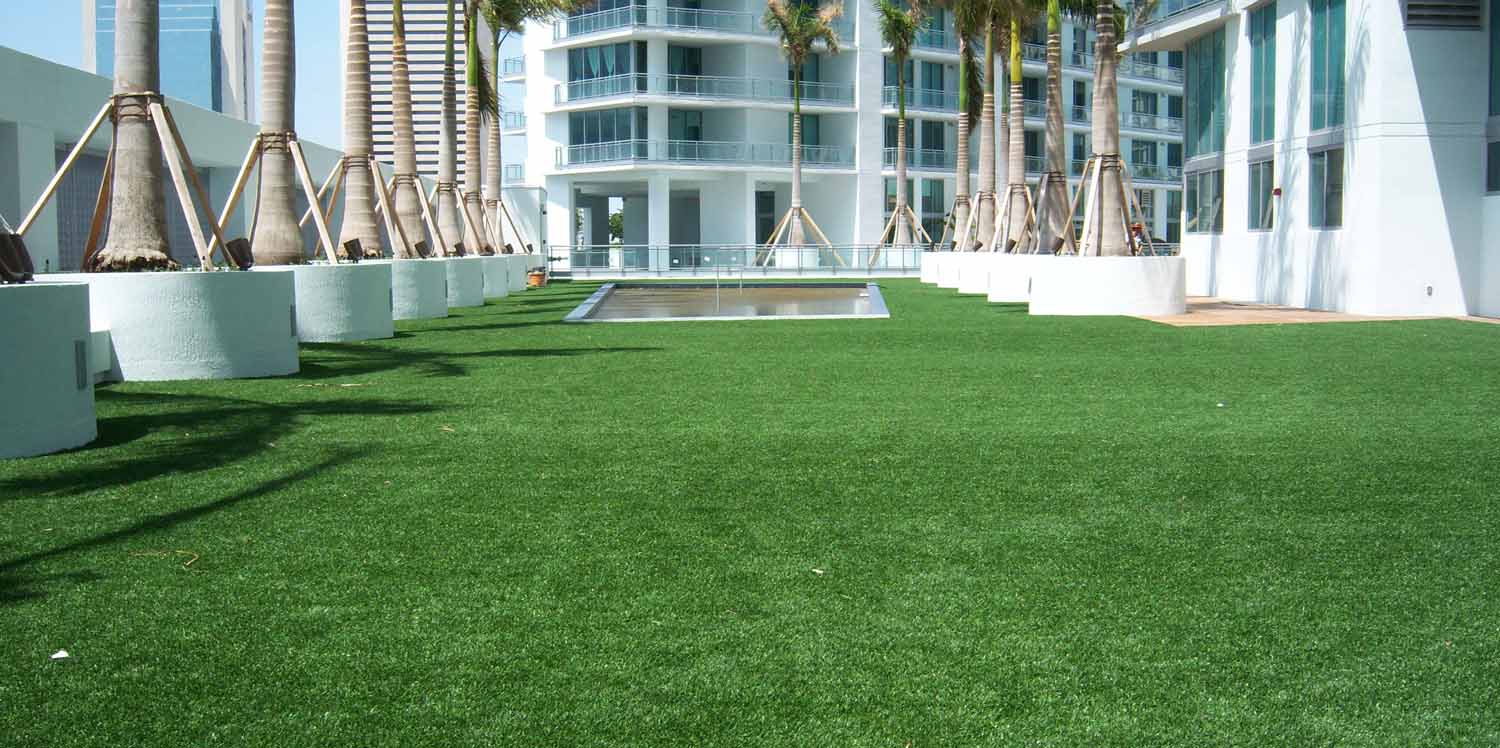
Commercial Artificial Turf Installation
Professional Commercial Artificial Turf Installation in Allen, TX.
View Service
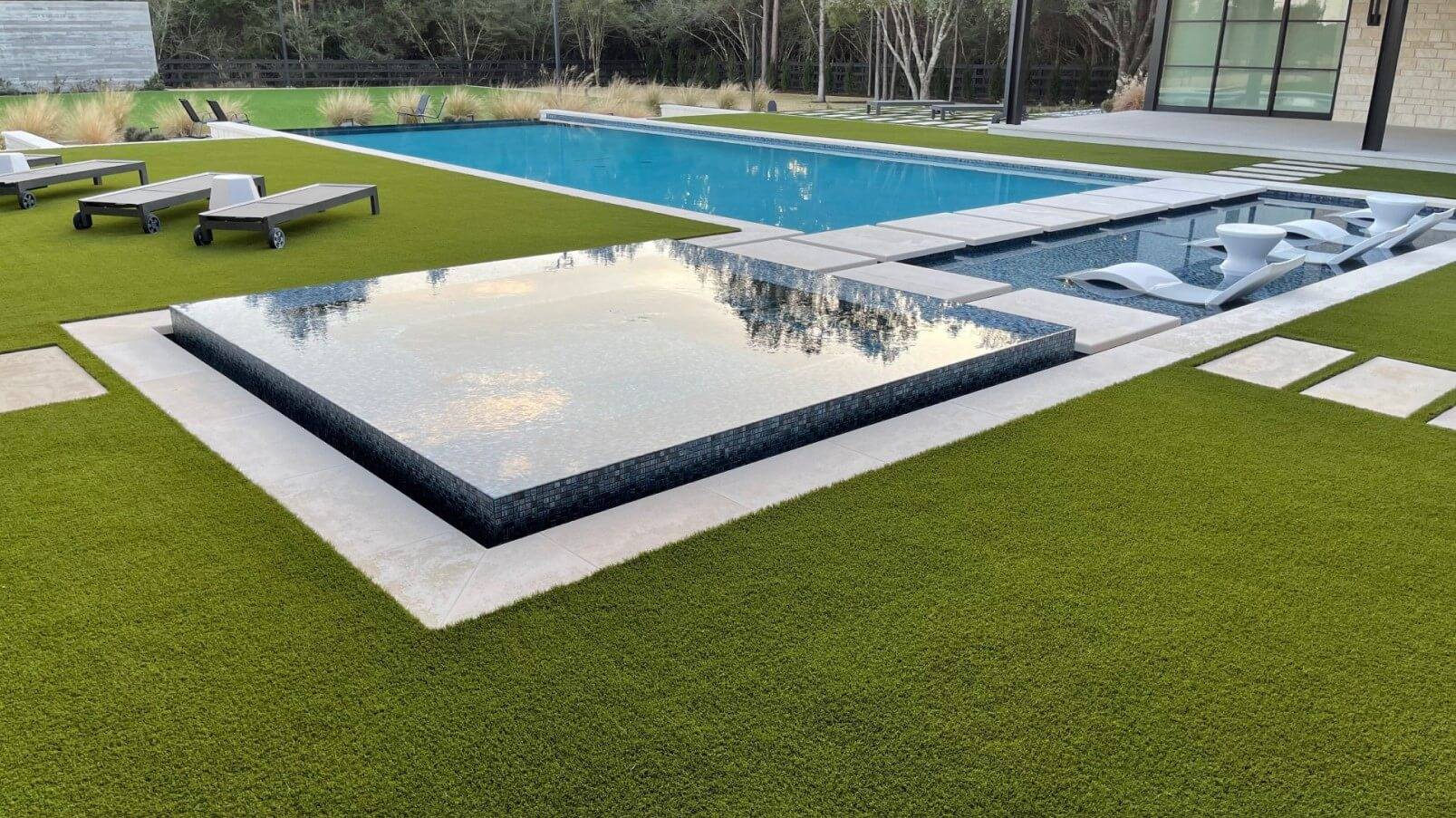
Residential Artificial Turf Installation
Professional Residential Artificial Turf Installation in Allen, TX.
View Service
Artificial Turf Putting Green Design
Professional Artificial Turf Putting Green Design in Allen, TX.
View Service
Artificial Turf Maintenance
Professional Artificial Turf Maintenance in Allen, TX.
View Service
Artificial Turf For Pets
Professional Artificial Turf For Pets in Allen, TX.
View Service
Artificial Turf Repair
Professional Artificial Turf Repair in Allen, TX.
View Service
Frequently Asked Questions
Can you fix drainage problems on artificial turf that was already installed by someone else?
Sometimes. Drainage retrofit on an existing installation depends on whether the surface can be pulled up, the drainage issue addressed in the base, and the surface reinstalled without damage. We assess the specific situation and tell you whether retrofit is feasible or whether replacement is the more cost-effective path.
How does Collin County clay affect drainage differently from other soil types?
Blackland Prairie clay has very low native permeability — it doesn't accept water quickly even when dry. Unlike sandy soils where water can percolate through the base and into native soil, clay requires that drainage be designed to move water laterally across the grade to exit points, not vertically through the soil profile. That's why base grade design is more critical on Collin County properties than in soil types that drain naturally.
What's a french drain and when is it needed?
A french drain is a perforated pipe installed in a gravel-filled trench that collects water moving laterally through the base layer and channels it to a discharge point. We recommend it when the site grade can't move water to a natural exit point quickly enough — typically in low spots, depressions, or areas surrounded by structures that block natural surface drainage.
Does the drainage system require any maintenance?
French drain and channel drain systems benefit from annual inspection to confirm that debris hasn't clogged the outlet. This is a simple inspection — checking that the outlet is clear and that water flows freely through the system. We can include this as part of a maintenance visit.
Don't Install Over a Drainage Problem — Fix It First
We assess drainage conditions at every site visit before writing an estimate. Contact Artificial Turf of Allen to start with a drainage assessment.